
Jira AI Features: What Atlassian Intelligence Actually Does (and What It Misses)
Diana manages product for a B2B SaaS company with about 60 engineers across eight teams. She spends roughly a third of her week inside Jira -- triaging bugs, grooming the backlog, reviewing sprint results, and writing up status reports for leadership. When Atlassian started rolling out AI features under the "Atlassian Intelligence" brand, she was the first person on her team to turn them on. "If it saves me 30 minutes a day, I'll put up with anything," she said.
She's been using Atlassian Intelligence for five months now. Some of it saves her time. Some of it is a gimmick. And the things she actually needs most aren't in the product at all.
What Atlassian Intelligence Actually Ships Today
I want to walk through what's actually live right now, because Atlassian's marketing site blurs the line between "shipped product" and "roadmap bullet point" in a way that borders on dishonest.
Natural language to JQL. You type "show me all high-priority bugs assigned to the platform team created in the last two weeks" and it spits out JQL. Diana uses this one constantly. It works well for straightforward queries. It struggles with compound conditions -- "bugs in payments OR checkout that are unresolved and were created by someone on the backend team" sometimes generates incorrect JQL, especially around the OR logic. Diana puts the first-try accuracy at about 75%. The other quarter of the time, she tweaks the JQL by hand. So you still need to know JQL. Think of it as autocomplete for queries, not a replacement for learning the syntax.
Issue summaries. Click a button on any Jira issue and you get a generated summary of the title, description, and comments. Handy when an issue has 15 comments and you need the gist without reading every reply. Diana uses this during backlog reviews when she's scanning through issues she didn't create. The summaries are generally accurate but bland -- they read like a book report, listing what was said without synthesizing what it means. "The team discussed the payment timeout issue. Several solutions were proposed. A decision is pending." Accurate. Not helpful.
Smart suggestions for fields. When you create an issue, Atlassian Intelligence can suggest the issue type, priority, and labels based on the title and description. Diana finds this hit-or-miss. For bugs with clear descriptions ("Login page returns 500 error when user enters email with plus sign"), the suggestions are usually right. For ambiguous issues ("Improve the onboarding experience"), the suggestions are generic to the point of being useless. It suggests "Story" for the issue type and "Medium" for the priority, which is what anyone would have guessed without AI.
Confluence AI features. Since Atlassian Intelligence spans the Atlassian suite, there are AI features in Confluence too -- generate page summaries, draft content from prompts, define terms. Diana uses the page summary feature when reviewing long PRDs. It's okay. The draft-from-prompt feature, though, generates content so generic that Diana spent more time editing it than writing from scratch. She stopped using it after a week.
AI in Jira Service Management. JSM has an AI virtual agent for customer requests. Diana's team doesn't use JSM, so this is secondhand. Friends who do say it handles cookie-cutter requests fine (access requests, password resets). Anything requiring context about the customer's history? It falls over.
What Works Well Enough
The natural language to JQL feature is the clear winner. It's not perfect. But Diana uses natural-language-to-JQL maybe 12 times a day, and it gets her to the right filter faster than typing raw JQL about three out of four tries. She learned JQL because she had to, not because she wanted to. Shaving a few seconds off each query adds up.
Issue summaries are useful in narrow circumstances: long comment threads, issues you're reviewing but didn't create, and catch-up sessions after vacation. The problem is that these circumstances account for maybe 5% of Diana's interactions with Jira. Most of the time, she knows the issue because she created it or has been following it. The summary tells her what she already knows.
The overall theme of Atlassian Intelligence is that it makes individual interactions with Jira slightly faster. Create an issue a few seconds quicker. Find a filter with less typing. Catch up on a long thread without reading every comment. These are real improvements. They're also small improvements. They sand down the small rough edges but leave the big, time-consuming workflows completely untouched.
The Gap Between What's Shipped and What's Needed
This is the part Atlassian probably doesn't want to hear. Every AI feature they've shipped speeds up individual Jira actions. But Diana's week isn't eaten by individual actions. It's eaten by workflows that cut across dozens of issues, multiple sprints, and eight different teams.
Backlog grooming. Diana's teams have roughly 400 open issues in the backlog. She runs grooming every two weeks per team. Prep alone takes 90 minutes: scanning for stale issues, hunting duplicates, rechecking priorities, and figuring out which issues have been sitting untouched since last quarter. Atlassian Intelligence can summarize one issue at a time. It cannot look at the backlog and say "these three issues are duplicates" or "this P2 bug has sat open for 60 days, so it's either a P1 you're ignoring or a P4 you should close." That kind of cross-issue reasoning is the whole point of grooming. It's nowhere in the product.
Sprint reporting. Every two weeks, Diana writes a sprint summary for leadership. What shipped, what slipped, what's at risk, what the velocity trend looks like. She pulls data from Jira's sprint report, reads through completed issues, checks for patterns in what carried over, and writes a narrative. Atlassian Intelligence can't generate this. No "summarize this sprint" button exists. You also can't ask it to compare this sprint to the last three and tell you if things are getting better or worse. The data is all in Jira. The synthesis isn't.
Triage. About 50 new issues land per week across Diana's teams. They come from customer support, internal reports, monitoring alerts. Somebody has to read each one, decide on priority, pick the right team, slap on labels, and figure out if it belongs in the current sprint. Atlassian Intelligence's field suggestions help on a per-issue basis, but there's no batch triage capability. You can't hand it 20 new issues and say "sort these by urgency and suggest assignments." It looks at each issue in a vacuum, with zero awareness of what else just came in. Three bugs about the same service in the same hour? Atlassian Intelligence doesn't notice the pattern.
Cross-team dependency tracking. Team A needs Team B's API, which needs Team C's infrastructure migration. Diana tracks these dependency chains mostly in her head, with some linked issues in Jira for backup. But Jira's linking is manual and often incomplete. Atlassian Intelligence doesn't analyze link chains and surface risks. It doesn't say "Team B's API task has been blocked for a week, which is going to delay Team A's feature and Team C's migration." That connection exists in the data. Nobody's reading it.
Where Agents Fill the Gaps
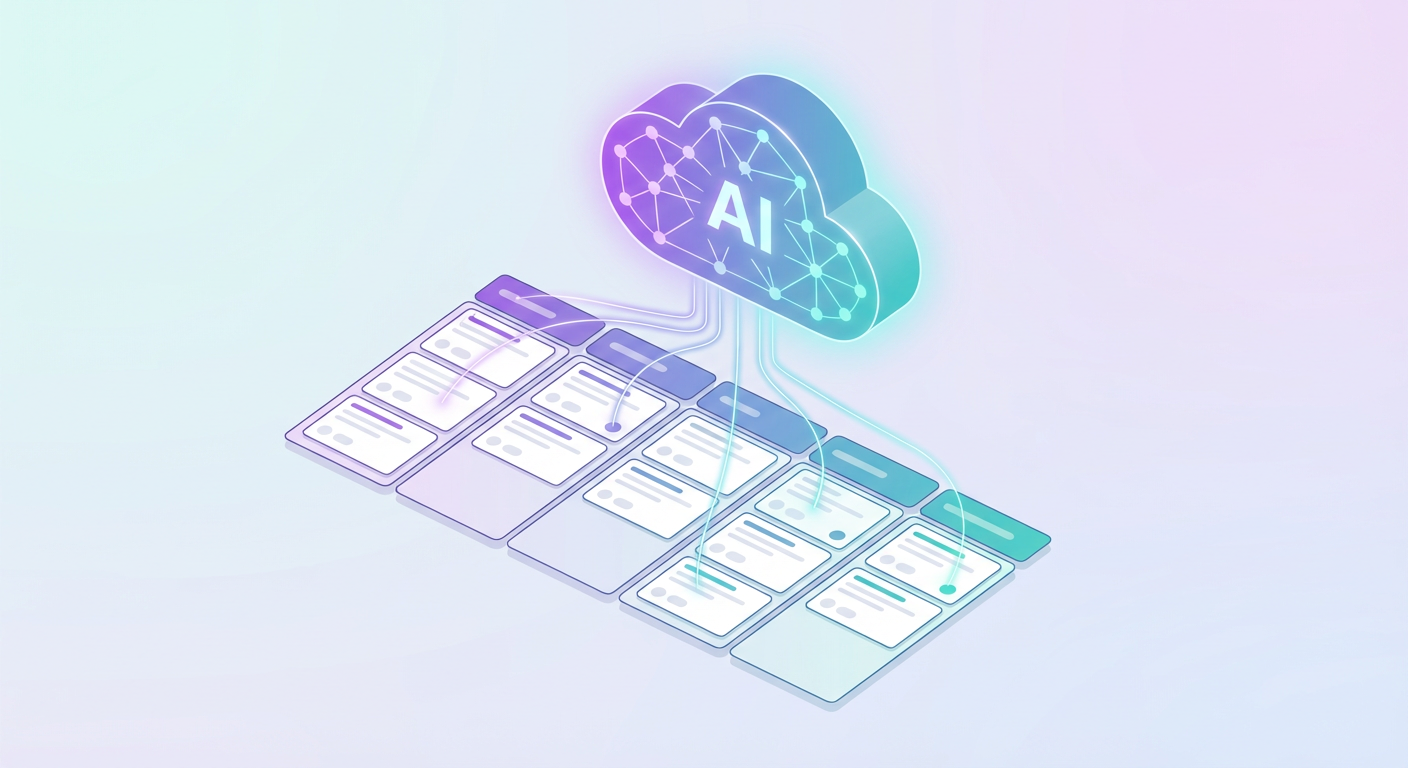
The pattern in everything Diana needs but doesn't have is the same: cross-issue reasoning. Looking at multiple issues, multiple sprints, or multiple teams and drawing conclusions. Atlassian Intelligence operates at the single-issue level. The hard problems operate at the system level.
A backlog grooming agent does Diana's two-hour prep in minutes. It reads every issue in the backlog. Flags anything untouched for 30 or 60 days. Finds probable duplicates by comparing descriptions semantically, not just matching keywords. Rechecks whether priorities still align with current sprint goals. Then it produces a grooming report. Diana reads through it, agrees or disagrees with each recommendation, and shows up to grooming with an actual agenda. Before, she was staring at a blank Jira board trying to remember what needed attention.
The sprint reporting problem is similar. An agent that reads the sprint data -- completed issues, carried-over items, velocity, scope changes -- and generates a narrative summary. Not a list of ticket numbers. Something like: "Velocity dropped 15% versus the two-sprint average because three unplanned production bugs hit the payments service. The onboarding epic is 60% done and still on track for Q2. Two items got descoped and pushed to the backlog."
Triage is where single-issue AI falls apart most visibly. When three bugs land in the same hour about the same service, an agent that processes issues in batch notices the pattern, links the issues together, and bumps the priority. Atlassian Intelligence? It looks at each one alone and suggests "Bug" and "High" three separate times. It never connects the dots.
Atlassian's Roadmap vs. What's Available Now
Atlassian talks a lot about their AI roadmap. Cross-project summaries, AI-powered planning, proactive recommendations. Some of that might ship and work great. But right now, in early 2026, there's a canyon between the roadmap and the shipping product.
Diana's response was blunt. "I can't run my team on a roadmap. I need to solve the backlog grooming problem this quarter, not next year. If Atlassian ships something better eventually, I'll switch to it. But I'm not going to wait."
She's right. I hear the same thing from PMs and eng leads all the time. Atlassian Intelligence is a foundation. The natural language to JQL feature shows that the team can ship useful AI features. But the features that would actually transform how teams use Jira -- cross-issue reasoning, batch processing, system-level synthesis -- aren't here yet.
Should You Turn On Atlassian Intelligence?
Yes. The natural language to JQL alone is worth it, and the issue summaries are helpful in enough situations to justify the toggle. There's no downside to enabling it -- the features are additive, not disruptive.
But don't expect it to replace the cognitive work of running a team on Jira. It won't groom your backlog. It won't write your sprint report. It won't triage your incoming issues. It won't surface cross-team dependencies. Those problems require a different kind of intelligence -- one that reads across issues, reasons about patterns, and generates artifacts that weren't there before.
Diana uses both. Atlassian Intelligence for the small stuff. Agents for the hard stuff. She says she'll keep watching Atlassian's roadmap, but she's done waiting for it.
Try These Agents
- Jira Backlog Grooming Agent -- Surface stale issues, duplicates, and mis-prioritized backlog items
- Jira Sprint Status Reporter -- Generate narrative sprint summaries from Jira sprint data
- Jira Ticket Triage Agent -- Auto-suggest priority, component, assignee, and labels for incoming issues
- Jira Automated Bug Reporter -- Create bug tickets from alerts with automatic deduplication