
I Used Optmyzr for a Year. Here Is Why I Switched to AI Agents.
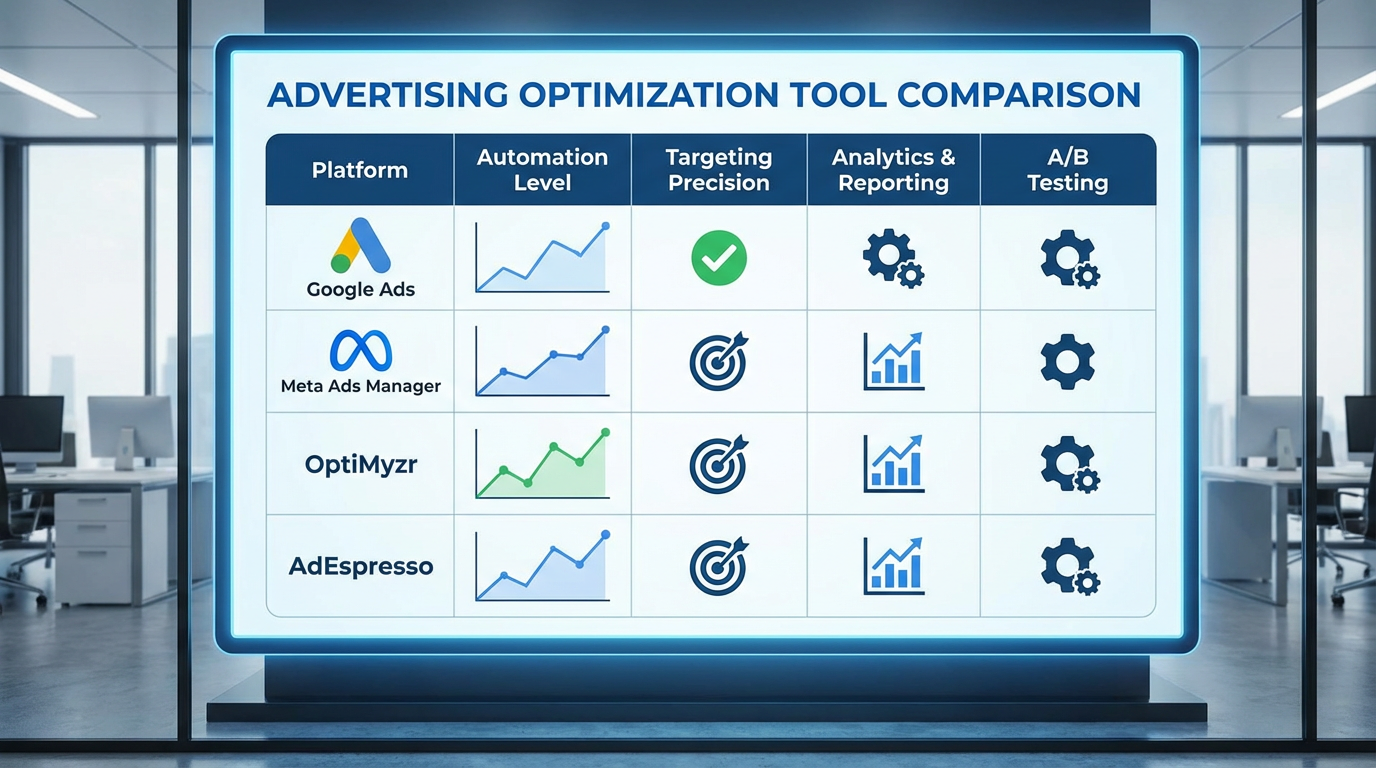
I'll start with the good stuff. Optmyzr does what it says it does. We used it for 14 months and during that time it helped us manage bid adjustments, run optimization scripts, generate client reports, and apply rule-based automations across about $180,000 in monthly ad spend. The product works. The team behind it clearly knows PPC. If you manage Google Ads accounts and you need structured, rule-based optimization, Optmyzr will do that for you.
Now here's the part where I explain why we stopped using it.
Tomás was the first to articulate the problem. He was looking at our Q3 numbers and noticed something that Optmyzr couldn't help with. Our Google Ads campaigns generated 340 leads in September. Optmyzr told us the CPA, the conversion rate, the quality scores, the impression share. By every metric Optmyzr tracks, September was a good month. CPA was below target. Conversion volume was up 18% quarter-over-quarter.
But when Tomás cross-referenced those 340 leads against our CRM, only 22 became qualified opportunities. That's a 6.5% lead-to-opportunity rate. In August, with fewer leads (290), we'd had 31 opportunities, a 10.7% rate. We were spending more money to generate more leads that were worse. Optmyzr couldn't see this because Optmyzr doesn't know what happens after the conversion pixel fires.
What Optmyzr Does Well
I want to be fair to the product because it genuinely solves real problems.
Rule-based optimizations. You can build rules like "if a keyword's CPA is 50% above the campaign average for 14 consecutive days, pause it." These run on schedule and apply changes automatically. For high-volume accounts where you can't manually review every keyword, this is useful. We had about 40 active rules and they caught things we would have missed.
PPC audits. Optmyzr's account audit tool runs a checklist against your account structure: ad group organization, keyword match types, negative keyword coverage, ad rotation settings. It's like a code linter for Google Ads. It flags structural issues. Elena ran the audit quarterly and it consistently found things to fix.
Reporting. Client-facing reports with white-label branding. We sent these to internal stakeholders (not actual clients, but our VP treated them like client reports). The reports were well-formatted and included the right metrics.
Script management. If you use Google Ads scripts, Optmyzr provides a library of pre-built scripts with a management interface. Better than maintaining scripts in a Google Doc, which is what I was doing before.
All of these features work at the layer where Optmyzr operates: inside the Google Ads account, looking at Google Ads metrics, optimizing Google Ads performance. And that layer matters. But it isn't the whole picture.
Where Optmyzr Stops
Here's the list of questions Optmyzr couldn't answer for us, roughly in order of how badly we wanted the answers:
Which campaigns generate leads that actually become revenue? Optmyzr sees conversions. It doesn't see whether those conversions turned into sales-qualified leads, pipeline, or closed deals. The gap between "someone filled out our form" and "someone paid us money" is enormous, and it's invisible to any tool that only reads Google Ads data.
Are we spending more to acquire worse leads? This is Tomás's September question. CPA going down while lead quality goes down is a disaster disguised as success. You need CRM data to see it.
Which keywords attract buyers versus tire-kickers? A keyword might convert at 8% by Google's definition (form fills) but produce zero qualified opportunities. Another keyword might convert at 2% but every lead becomes a deal. The second keyword is vastly more valuable, but Optmyzr's optimization rules would favor the first one because it has the better conversion rate.
What's the actual ROI on our ad spend? Not ROAS calculated from conversion values we estimated in Google Ads. Actual return: revenue generated from ad-sourced leads divided by ad cost. This requires connecting Google Ads data to CRM pipeline data.
This isn't a criticism of Optmyzr specifically. Wordstream, Adalysis, and every other PPC optimization tool share the same limitation. They optimize within the walled garden of ad platform data. They can't see downstream outcomes.
The AI Agent Approach
We replaced Optmyzr with a combination of AI agents that do two things Optmyzr couldn't: connect ad data to revenue data, and analyze patterns in natural language instead of predefined rules.
The first agent we set up was a lead quality analyzer that pulls Google Ads campaign and keyword data, cross-references it against our CRM conversion data, and identifies which campaigns and keywords generate leads that actually close. The first time it ran, it produced a finding that changed our budget allocation: our "competitor comparison" campaigns had the third-highest CPA in the account but the highest lead-to-close rate. Leads from people comparing us to competitors were 3x more likely to become customers than leads from generic category terms. We'd been underspending on those campaigns because Optmyzr's rules flagged them for high CPA. The CPA was high because the clicks were expensive. The ROI was outstanding because the leads were good.
That single insight shifted $4,000 in monthly budget from low-CPA, low-quality generic campaigns to high-CPA, high-quality comparison campaigns. Within two months, our pipeline from Google Ads increased 23% while total ad spend stayed flat.
Rules Versus Reasoning
The more fundamental difference between Optmyzr and AI agents is the difference between rules and reasoning.
Optmyzr rules are conditionals. If metric X crosses threshold Y, take action Z. You define the metric, the threshold, and the action. The system executes. This works when you know in advance exactly what you're looking for. "Pause keywords with CPA above $80" is a rule that makes sense and Optmyzr runs it reliably.
But what about patterns you don't know to look for? Kenji discovered that our lead quality dropped significantly on weekends. Not the volume. The quality. Weekend leads converted at the same rate on the form but progressed to qualified opportunity at less than half the rate of weekday leads. Nobody wrote a rule to check for this because nobody anticipated it. An agent analyzing the data spotted the pattern because it wasn't limited to checking predefined conditions. It read the data and identified what was unusual.
The weekend finding led us to reduce weekend bids by 40% and reallocate that budget to weekday mornings when lead quality peaked. Optmyzr could have implemented the bid adjustment once we identified it. But Optmyzr wouldn't have identified it.
Diana summarized the difference this way: "Optmyzr is a robot that follows instructions. An agent is an analyst that has opinions." That's reductive but directionally right. A rule-based system does what you tell it. An agent notices things you didn't think to ask about.
The Cost Comparison
Optmyzr pricing starts around $208/month for their basic plan and goes up from there based on ad spend and features. We were paying $499/month for the plan that covered our spend level and included all the features we used.
That's $6,000 per year for an optimization layer that works inside Google Ads data. For us, the AI agent setup handles reporting, monitoring, anomaly detection, and lead quality analysis. The agent approach also connects to tools outside Google Ads: CRM data, Google Sheets for budget tracking, Slack for team communication.
But cost isn't really the deciding factor. If Optmyzr solved the lead quality problem, we'd happily pay $499/month for it. The issue is capability, not price. We needed to connect ad spend to revenue outcomes, and no PPC optimization tool in the traditional mold does this because they're all built around the same assumption: that Google Ads metrics are the complete picture. They aren't.
Who Should Still Use Optmyzr
If your primary need is structural PPC management — making sure keywords are organized properly, match types are correct, negative keywords are in place, bid adjustments follow rules — Optmyzr is a solid product. I'd recommend it to agencies that manage many accounts and need systematic quality control without going deep on revenue analysis for each one.
If you're an in-house team managing your own ad spend, and you care about the connection between ad spend and revenue, and you want analysis that goes beyond predefined rules, AI agents are a better fit. You get the monitoring and reporting that Optmyzr provides, plus the downstream revenue analysis that Optmyzr can't provide.
Rafael asked me recently whether we miss anything about Optmyzr. The honest answer is that the PPC audit checklist was useful and we haven't replicated it with agents yet. It caught structural issues, like ad groups with too many keywords or campaigns missing sitelink extensions, that don't show up in performance data. We do a manual audit quarterly now instead. Everything else the agents handle better.
The biggest thing we don't miss is the optimization score. Optmyzr gives you a score from 0-100 that tells you how "optimized" your account is. It sounds good. In practice, you end up chasing the score instead of chasing outcomes. You make changes because they improve the optimization score, not because they improve your business. Marcus called it "vanity metrics for PPC managers." I'll leave it at that.
Try These Agents
- Google Ads Lead Quality Analyzer -- Connect ad spend to CRM outcomes and identify which campaigns generate revenue, not just conversions
- Google Ads Campaign Monitor -- Automated anomaly detection with root cause analysis and Slack alerts
- Google Ads Performance Report -- Weekly performance digest with campaign metrics and written analysis
- Google Ads Keyword Performance Analyzer -- Identify keywords with declining quality or hidden value