
Shopify B2B Order Automation: From Lookup to Invoice in Minutes
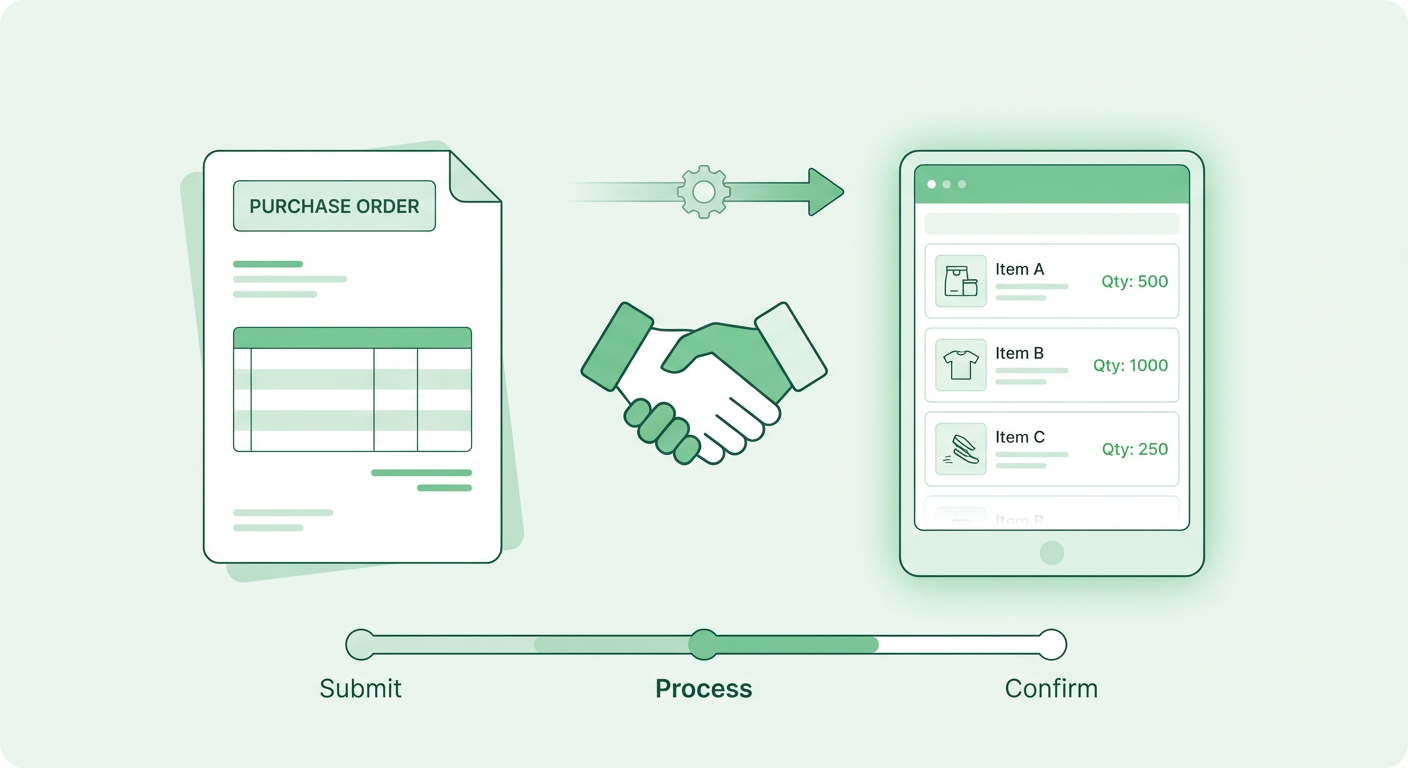
I watched a wholesale sales rep named Marcus process a single B2B order last month. The buyer wanted 50 units of three different products with tiered pricing. Here's what Marcus did: opened Shopify admin, searched for the first product, wrote down the SKU and base price, opened a spreadsheet to calculate the wholesale discount, repeated that for the other two products, went back to Shopify admin, clicked into Draft Orders, added each product one by one, manually adjusted the prices to the wholesale rate, added the customer's shipping address (which he copied from an old email), applied the net-30 payment terms, reviewed the whole thing, created the draft order, sent the invoice, then messaged the buyer on Slack to confirm the invoice was sent.
Eighteen minutes. For one order. Marcus processes 12-15 of these a day. That's about 3.5 hours of his day spent on data entry, not selling. He knows the products. He knows the customers. He could be having conversations that lead to bigger orders. Instead he's copying SKUs between tabs.
Why B2B on Shopify is Still Manual
Shopify's B2B features have gotten better. They added company profiles, price lists, payment terms, and draft orders. If you're on Shopify Plus, you get a dedicated B2B catalog experience. But the workflow of creating a draft order is still fundamentally manual.
A rep gets an order request over email, Slack, or phone. The buyer says something like "I need 200 units of the classic tee in black, sizes M through XL, and 100 units of the hoodie in navy, sizes S through L. Same pricing as last time. Net-30." That's a straightforward order. But turning it into a Shopify draft order requires looking up each product, finding the right variants, checking inventory to make sure those quantities are available, applying the correct price list or manually adjusting prices, adding all the line items, setting payment terms, and sending the invoice.
Each of those steps is a few clicks. A few clicks multiplied by five products multiplied by multiple variants per product adds up fast. And that's the clean scenario. The messy scenario is when the buyer references products by nicknames your Shopify catalog doesn't use, or wants a price that's different from any existing price list, or orders a variant that's out of stock and you need to offer an alternative.
Shopify Flow can automate some post-order tasks like tagging or notifications. But it can't handle the order creation itself because order creation requires interpreting a human request, searching the catalog, making decisions about pricing and inventory, and assembling a draft. That's agent territory.
How an AI Agent Handles B2B Orders
A draft order creator agent works by taking the buyer's request in natural language and converting it into a Shopify draft order. The rep pastes the buyer's email or Slack message into the agent. The agent reads it and figures out what they want.
Then it searches the product catalog for each item. It doesn't need exact product names or SKUs. If the buyer says "classic tee" and your product is called "The Classic Cotton T-Shirt," the agent figures it out. It matches the variants to what the buyer asked for. Black, sizes M through XL, that maps to four specific variant IDs in your Shopify store.
Next it checks inventory. If 200 units of the medium are in stock but only 150 of the large, the agent flags that instead of silently creating an order that can't be fulfilled. The rep can adjust the quantities or confirm the partial fill before the draft goes out.
Then it applies pricing. If the buyer has a price list in Shopify, the agent uses it. If the rep says "same pricing as last time," the agent pulls the customer's last order and matches the per-unit prices. If the buyer negotiated a custom discount, the rep can tell the agent "15% off list price" and it does the math.
Finally, it creates the draft order in Shopify with all line items, prices, payment terms, and the customer's shipping address. One click to review, one click to send the invoice. What took Marcus 18 minutes takes about 90 seconds.
The Inventory Check That Saves Deals
The most common B2B order failure I see is inventory mismatch. A rep creates a draft order, sends the invoice, the buyer pays, and then fulfillment discovers they don't have enough stock of one variant. Now you're in an awkward conversation with a wholesale buyer about partial shipment or backorders. That's not a great look when you're trying to build a long-term B2B relationship.
The agent checks inventory as part of the order creation process. Before the draft order is built, it verifies that every variant in the requested quantity is actually available. If there's a shortfall, the rep knows immediately. They can call the buyer and say "we've got everything except the medium, which we're 50 short on. Want me to ship what we have and backorder the rest?" That conversation happens before the invoice goes out, not after.
This is something Shopify doesn't enforce on draft orders. You can create a draft order for 500 units of a product you have 12 of. The system won't stop you. The agent does.
Scaling Without Adding Reps
A typical B2B sales rep on Shopify can process 12-15 draft orders a day if that's most of what they do. If they're also prospecting, managing relationships, and handling account issues, it drops to 6-8. When your wholesale business grows, the natural response is to hire another rep. That's $50-80K in salary, plus the months of onboarding before they know your product line and pricing structures.
With an agent handling the order creation workflow, a single rep can process 40-50 draft orders a day because they're only reviewing and approving, not building each one from scratch. The agent does the product lookup, pricing calculation, and order assembly. The rep confirms the details and sends it.
For tracking what's happening across all those orders, pair the draft order agent with a bulk order status agent that shows you which invoices are sent, which are paid, which orders are fulfilled, and which are stuck. Instead of clicking into each draft order individually, you get a summary.
Why Use an Agent For This
B2B order processing is a weird problem because every individual step is simple. Look up a product. Check a price. Add a line item. None of it is hard. But the accumulation of simple steps into a 15-20 minute workflow, repeated a dozen times a day, is what makes it a bottleneck.
Traditional automation struggles here because the input is unstructured. A buyer sends an email, not a structured form. They use product nicknames, reference previous orders, negotiate on pricing, and change their minds mid-thread. You can't build a Shopify Flow that parses "same as last time but swap the navy for forest green and bump the quantity on the hoodies" into a draft order.
An agent can. It reads natural language, searches the catalog, understands context from previous orders, and assembles the draft. The rep stays in the loop for review and approval. The data entry disappears.
Marcus processes 30 orders a day now. Same number of hours. He's spending the extra time on relationship building and upselling, which is what a sales rep should be doing.
Try These Agents
- Shopify Draft Order Creator -- Turn a buyer's email into a Shopify draft order with pricing and payment terms
- Shopify Product Catalog Lookup -- Search your catalog by name, SKU, or description
- Shopify Bulk Order Status -- Monitor open draft orders, invoices, and fulfillment status across accounts