
Slack Chatbots Are Dead. Long Live Slack Agents
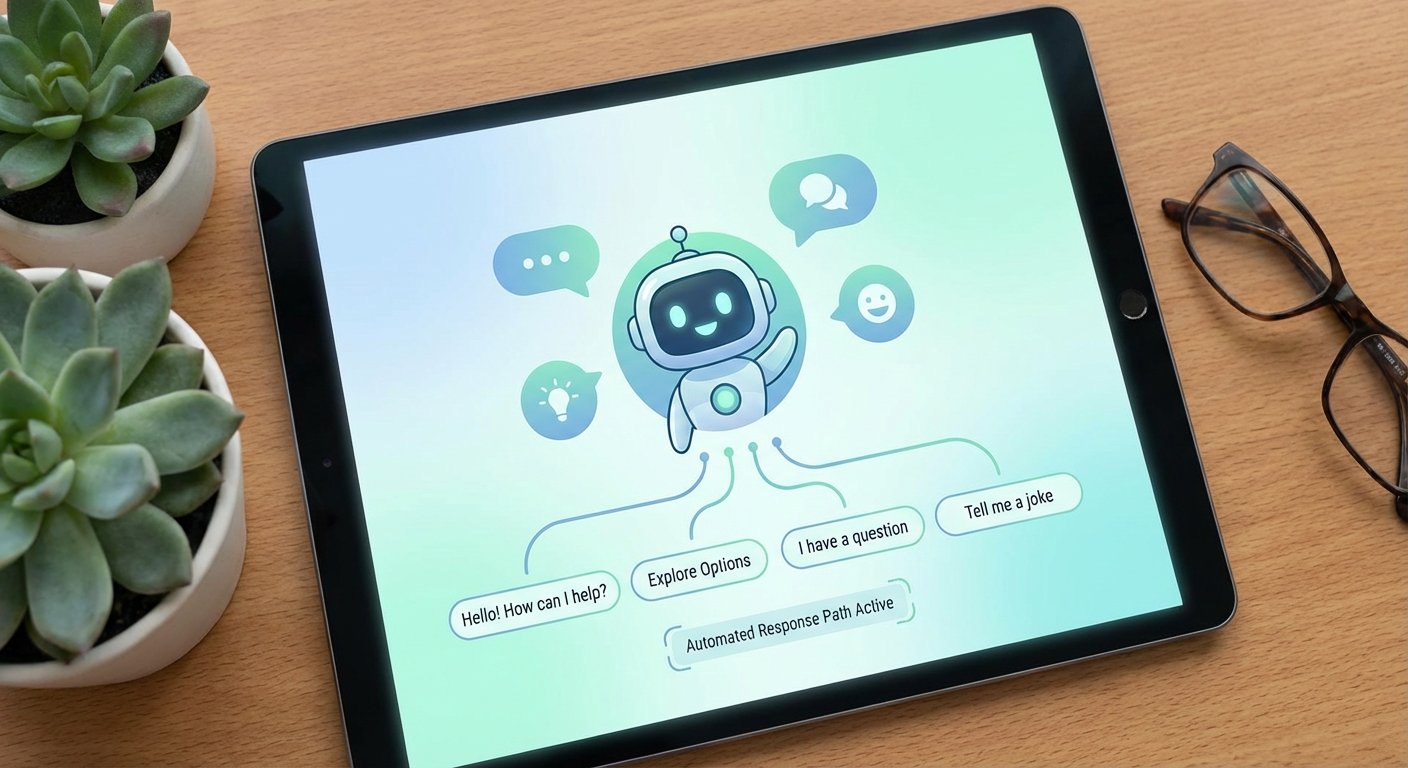
We had a Slack chatbot for about eight months. It was a good chatbot, as chatbots go. It handled FAQ lookups, routed support questions to the right channel, and could pull basic order information when someone typed a command. The team that built it did solid work.
Then one afternoon, Elena typed: "Has anyone talked to Beacon Group about the API rate limiting issue? I think Marcus mentioned something last week but I can't find the thread."
The chatbot responded: "I'm sorry, I didn't understand your question. Try one of these commands: /order-status, /faq, /route-ticket."
That response captures everything wrong with chatbots. Elena didn't have a command. She had a question. She wanted someone (or something) to search through the team's Slack history, find Marcus's conversation about Beacon Group's API rate limiting, and surface the relevant messages. A chatbot cannot do this because a chatbot doesn't understand questions. It matches patterns and executes commands.
An agent can do this. We replaced the chatbot with a conversation analyzer agent and the difference was immediately clear.
Chatbots: What They Actually Are
I want to be precise about what I mean by "chatbot" because the term has gotten blurry. A traditional Slack chatbot is a decision tree with a text interface. You type something, the bot matches it against a set of predefined patterns or keywords, and it returns a scripted response. If your input matches a pattern, you get an answer. If it doesn't, you get "I didn't understand."
The better chatbots have more patterns and more sophisticated matching. Some use basic NLP to handle variations in phrasing. But the fundamental architecture is the same: a finite set of expected inputs mapped to a finite set of predetermined outputs.
This architecture works for a narrow band of use cases. Slash commands for order lookups. FAQ retrieval. Simple routing ("type 1 for billing, 2 for technical, 3 for other"). Anything where the user's intent is predictable and the response is static.
It breaks the moment a question falls outside the expected set. And in a customer-facing team's Slack workspace, most real questions fall outside the expected set. "Did we ever resolve the data migration issue for TechFlow?" is not a FAQ. "What was the pricing we quoted to Northstar last month?" requires searching conversation history. "Is this the same bug that Summit Group reported in January?" requires connecting information across channels and time periods.
Kenji estimated that our chatbot successfully handled about 35% of the questions the team asked it. The other 65% got the "I didn't understand" response, at which point the person gave up on the bot and pinged a colleague directly. The chatbot was a middleman that only worked a third of the time.
Agents: What Makes Them Different
An AI agent in Slack does something fundamentally different from a chatbot. Instead of matching input to a script, it understands the question, figures out where the answer might live, goes and finds it, and assembles a response.
When Elena asked about Beacon Group's API rate limiting issue, the agent searched message history across relevant channels, found three messages from Marcus in #support-engineering from the previous Tuesday, identified a follow-up thread where Priya had posted an update, and synthesized the whole thing into a response: "Marcus discussed Beacon Group's API rate limiting on Tuesday in #support-engineering. He identified it as a configuration issue on their end, not a platform bug. Priya followed up on Thursday confirming that Beacon Group's engineering team applied the fix and the issue is resolved. Here are the relevant threads." With links.
That is not a better chatbot. That is a different category of tool. The chatbot knows its scripts. The agent knows your Slack workspace.
Two Weeks of Running Both Side by Side
For the first two weeks after deploying the agent, we kept the chatbot alive in a test channel. Whenever someone asked a question in the main workspace, Kenji would paste it into the test channel to see what the chatbot would have done. We logged about forty questions. The comparison was brutal.
The most telling example came from Tomás. He asked: "What's the status of the Apex Solutions deal?" Straightforward question, right? The chatbot would have needed him to type /order-status with a specific order number. Apex Solutions is a deal, not an order. The chatbot would have said "I didn't understand" or returned some random order it matched against the word "apex." The agent pulled CRM data and recent mentions from #sales and #deal-apex-solutions. Tomás got back: Apex Solutions is in Negotiation at $35K, last activity was a pricing call Wednesday, one competing vendor, decision expected by end of month. Full picture in four seconds.
Then there was Diana asking when we changed the refund policy. A chatbot might have matched "refund policy" to an FAQ entry and returned the current policy text. But Diana didn't want to know the policy. She wanted to know when it changed. The agent found an announcement from Diana's own manager in #ops from November 8th, plus a thread where the team argued about the new 30-day window. Date, context, and a link. Done.
Some questions were so far outside chatbot territory that it felt unfair even running the comparison. Priya asked who on the team had healthcare compliance experience. The chatbot returned its default "I didn't understand." Meanwhile, the agent searched for healthcare, HIPAA, and compliance across every channel and found that Priya herself had discussed HIPAA requirements during a deal back in September, and that Rafael had mentioned healthcare clients in a planning session. It surfaced both names with context about what they'd worked on.
My favorite was when Marcus asked for a summary of #product-feedback from the past week. The chatbot had no concept of summarization — that's not a command, that's a cognitive task. The agent read the week's messages and came back with: fourteen messages from six people, three separate requests for bulk export, a CSV formatting bug from Diana, and a custom dashboards feature request that Kenji forwarded from a customer.
Out of the forty questions we logged, the chatbot would have handled maybe twelve. The agent handled thirty-eight. The two it missed were about things that had happened in DMs, which the agent doesn't have access to. That's a privacy boundary, not a capability gap.
Why This Matters for Customer-Facing Teams
Internal knowledge retrieval is just one layer. The larger impact is on customer-facing work. When a customer emails about an issue and the support rep needs to find out if anyone on the team has dealt with this before, speed matters. In the chatbot world, the rep asks the bot, gets "I didn't understand," and spends 15 minutes searching Slack channels manually. In the agent world, they get an answer in seconds.
We connected the conversation analyzer with a customer mention tracker to build a more complete picture. Now when someone asks about a customer, the agent surfaces not just relevant Slack messages but also account data: ARR, last interaction, open tickets, renewal date, sentiment trend. A support rep can go from "I know nothing about this customer" to "I know everything about this customer" in one question.
Rafael, who handles our largest accounts, told me the tracker changed how he prepares for QBRs. "I used to spend an hour before each quarterly business review collecting data from Salesforce, Zendesk, and Slack. Now I ask the agent for a customer summary and it pulls everything into one response. The prep went from an hour to about five minutes."
The Chatbot Is Not Coming Back
We decommissioned the chatbot in December. Nobody asked for it back. Nobody even mentioned it. The transition from chatbot to agent was the smoothest technology change we've made, which tells you something about how much value the chatbot was providing.
If you're building or evaluating a Slack chatbot today, I would strongly suggest skipping that step entirely. Chatbots were the best available option when language understanding was primitive and search required exact matching. Neither of those constraints exists anymore.
The question is no longer "how do we build a better chatbot?" The question is "how do we give our team an agent that actually knows our workspace?" The answer involves real language understanding, the ability to search across channels and time, and access to customer data from connected systems. That combination is what turns Slack from a messaging app into an operating system for customer-facing work.
The chatbot era lasted about eight years. I don't think anyone will miss it.
Try These Agents
- Slack Conversation Analyzer -- Search and analyze conversations across channels with natural language questions
- Slack Customer Mention Tracker -- Track customer mentions with account context, sentiment, and engagement history
- Zendesk Escalation to Slack -- Intelligent support escalation alerts with full customer context
- Slack Deal Room Monitor -- Monitor deal channels for activity, risk signals, and stalled conversations