
SmartLead + Zapier Was Our First Automation. AI Agents Were the Last.
Our automation journey with SmartLead started the way most automation journeys start: someone on the team discovered Zapier and got excited.
Tomás set up the first Zap in about twenty minutes. When a lead replied in SmartLead, Zapier created a contact in Salesforce and posted a notification to our #sales-replies Slack channel. Clean. Simple. The team was thrilled. "We should automate everything," someone said in standup. Famous last words.
Over the next three months, Tomás built seventeen Zaps connecting SmartLead to Salesforce, Slack, Google Sheets, and our internal dashboard. It worked — mostly — until it didn't. And when Zapier automations break, they break in ways that are hard to debug, expensive to fix, and invisible until someone notices the data is wrong.
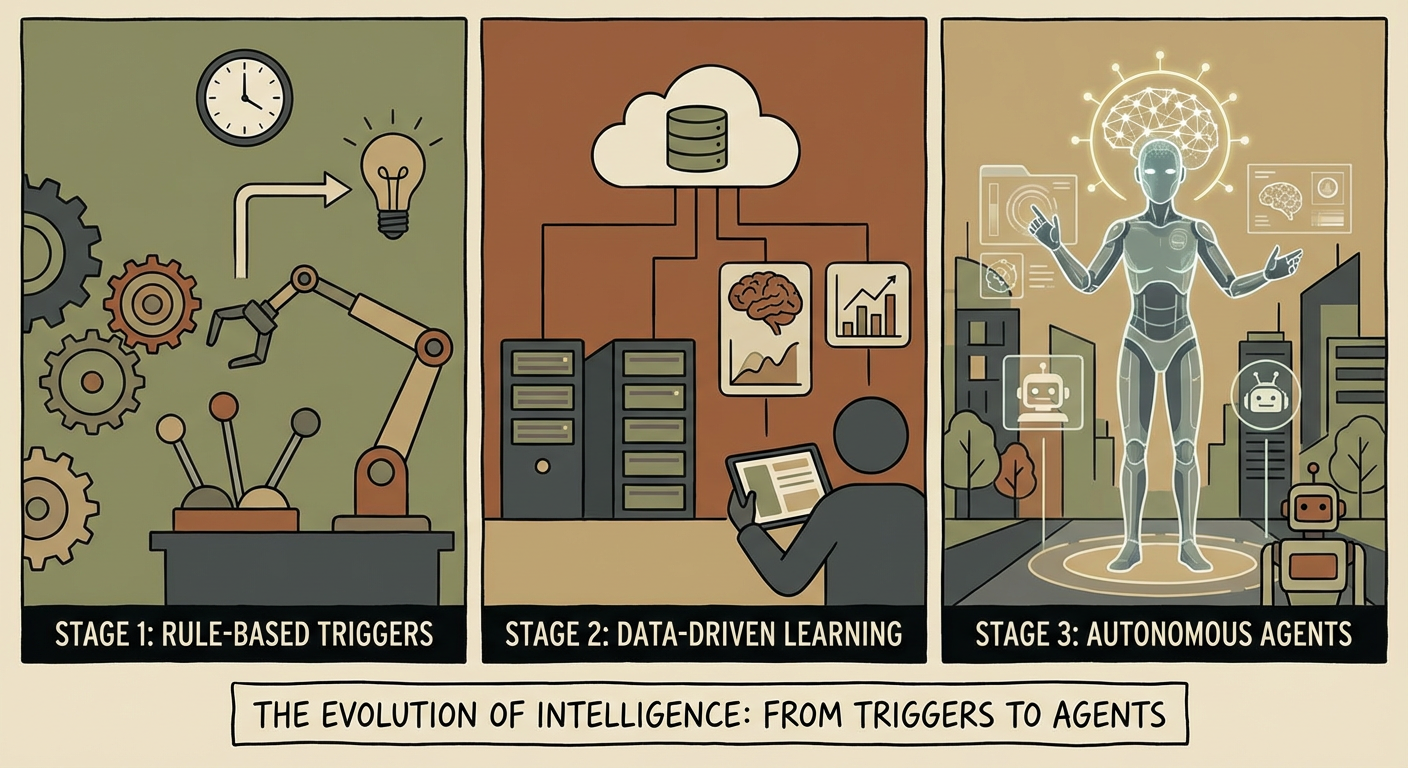
This is the story of three automation stages: Zapier, n8n, and finally AI agents. Each one solved problems the previous one couldn't, and each one revealed limitations we didn't know existed until we hit them.
Stage One: Zapier (Months 1-6)
The first Zaps were genuinely useful. New SmartLead reply triggers a Salesforce contact update. New campaign created triggers a Slack notification. Lead bounced triggers a Google Sheets log entry. Point-to-point automations with clear triggers and clear actions.
Problems appeared around month two.
The first was task limits. Zapier bills by the number of tasks — each trigger-action execution counts as one task. Our SmartLead account processes about 3,000 leads per week across campaigns. Each lead generates multiple events: added to campaign, email sent, email opened, email replied, email bounced. At roughly 15,000 events per week, we burned through Zapier's Professional plan limits before the second week of each month. Elena ran the math: staying on Zapier at our volume would cost about $600/month. For what amounted to seventeen if-then statements.
The second was data transformation. Zapier can move data between apps, but it's terrible at transforming data between apps. SmartLead sends a lead's company name as "ACME Corp." Salesforce expects "Acme Corp" to match against existing accounts. That capitalization difference means Zapier creates a duplicate account instead of matching the existing one. We tried using Zapier's Formatter tool to standardize text, but every transformation added another step, another task count, and another potential failure point.
The third was conditional logic. "If a lead replies AND their company has more than 500 employees AND they're in our target geography, create a high-priority opportunity in Salesforce. Otherwise, create a standard contact." Zapier can do basic filters, but multi-condition branching gets ugly fast. We ended up with parallel Zaps — one for high-priority leads, one for standard leads — that sometimes both triggered on the same lead because the filter conditions had a gap.
Priya summed up the Zapier era: "We automated the easy stuff. Everything else was still manual, and now the manual stuff was harder because half the data had been moved by Zapier and half hadn't."
Stage Two: n8n (Months 7-12)
Someone on the team — I think it was Marcus — suggested n8n as an alternative. Open source, self-hosted, no task limits, better conditional logic. We migrated.
n8n was genuinely better for our use case. We replaced seventeen Zaps with four workflows. The workflows had proper branching: if-else nodes that evaluated multiple conditions before deciding what to do. We could transform data inline using JavaScript function nodes. No task limits meant we weren't watching a meter tick down every week.
Marcus spent about a week building the workflows. The main one was a lead processing pipeline: SmartLead event comes in, n8n checks the event type, branches based on whether it's a reply/bounce/open, enriches the data with a Clearbit lookup, evaluates lead quality based on company size and title, and routes it to the appropriate Salesforce object. Beautiful workflow. Thirteen nodes. Marcus was proud of it.
Then it broke.
n8n runs on a server, and servers go down. Our workflow stopped executing at 2am on a Saturday when the hosting instance ran out of memory. It didn't restart automatically. It didn't send an alert. It just stopped. We didn't notice until Monday morning when Elena asked why no new leads had appeared in Salesforce since Friday. Sixty-seven leads were stuck in limbo — they'd replied to our cold emails but our CRM had no record of them. Sixty-seven potential conversations that started two days late.
We added monitoring. Then the Clearbit API changed an endpoint and the enrichment node started failing silently — it returned empty data instead of erroring, so every lead came through with blank company information. A week later, SmartLead updated their webhook payload format. One field changed from a string to an array. The workflow crashed on every event until Marcus updated the function node.
The pattern was clear: n8n gave us more power than Zapier, but it also gave us more maintenance. Every external API change, every server hiccup, every edge case in the data required a developer to go in and fix something. Marcus estimated he spent about 8 hours per month maintaining the n8n workflows. That's almost a full day every month spent on plumbing.
The deeper problem was that n8n, like Zapier, is fundamentally trigger-based. Something happens, the workflow reacts. It can't evaluate context. It can't make judgment calls. It can process "lead replied" but it can't process "this lead replied with a question about pricing, which suggests they're further along in the buying process than a typical reply, so we should route them differently." Triggers don't understand meaning. They understand events.
Stage Three: AI Agents (Month 13-Present)
We replaced the entire iPaaS stack — all four n8n workflows — with an AI agent that syncs SmartLead to Salesforce. The transition took about a day. Not a day of building. A day of configuring and testing.
The difference is architectural. Zapier and n8n move data between systems based on predefined rules. An agent understands the data and decides what to do with it.
Here's a real example. A lead named Diana Chen replied to our campaign with: "Interesting. We're actually evaluating solutions like this for Q2. Can you send more info to my colleague, James Rivera (j.rivera@company.com)?"
In the Zapier world, this would trigger "lead replied" and create a Salesforce contact for Diana. That's it. The mention of James Rivera, the Q2 timeline, the buying intent — all ignored. In the n8n world, same outcome. The workflow could parse the reply event but not the reply content. It sees "replied = true" and acts accordingly. The actual words in the reply are invisible to both tools.
The agent read the reply and did four things: updated Diana's Salesforce contact with the interaction, created a new contact for James Rivera with the email from the reply, noted the Q2 evaluation timeline on the opportunity, and flagged the lead as high-intent for the sales team. It understood the content of the reply, not just the fact that a reply happened.
Rafael, who works the leads, told me: "I used to read every reply myself to figure out what to do next. Now I open Salesforce and the agent has already triaged them. The high-intent leads are flagged. The referrals are already created as contacts. I just start calling."
What Agents Handle That iPaaS Can't
The gap between iPaaS and agents isn't about features. It's about understanding.
Zapier and n8n handle structured events: this field changed, this threshold was crossed, this webhook fired. They're excellent at connecting API endpoint A to API endpoint B. Agents handle unstructured decisions. Should this lead be marked as high-priority? Is this reply positive or negative? Does this bounce pattern suggest a list quality problem or a domain reputation issue? These questions require understanding context, not just evaluating conditions.
We still use n8n for a few things — file transfers between cloud storage, scheduled data exports. But anything involving SmartLead data that requires interpretation or judgment is handled by agents now.
The maintenance difference is stark. Marcus spent 8 hours per month maintaining n8n workflows. The agent has required about 2 hours of attention in the past five months total, and that was mostly us adjusting routing preferences, not fixing breakages. When SmartLead changed their API, the agent adapted. When Salesforce added a new required field, the agent noticed and asked us how to populate it instead of failing silently.
The Cost Comparison
Twelve months with Zapier: $7,200 in subscription costs, plus 20 hours of Tomás's time building and debugging Zaps.
Six months with n8n: $1,800 in hosting, plus 48 hours of Marcus's time at $180/hour ($8,640). Total: $10,440.
Five months with agents: a fraction of either previous approach. Zero engineering maintenance hours. Monthly cost lower than Zapier alone.
Elena, who lived through all three stages, put it simply: "Zapier connected our apps. n8n connected our apps with logic. The agent connects our apps with understanding. Those are three very different things."
What I'd Tell Someone Starting Today
Skip Zapier for SmartLead workflows. It's fine for simple notifications, but the moment you need conditional logic or data transformation at volume, you'll outgrow it. Skip n8n unless you have dedicated engineering resources and purely structural automation needs. Start with agents for anything that requires judgment — lead routing, reply triage, campaign monitoring, CRM syncing with deduplication. These are decisions disguised as data operations.
Tomás, Marcus, and Elena all agree on one thing: the best automation we built was the last one. Not because we got better at building automations, but because we finally found a tool that matched the actual complexity of what we were trying to automate. SmartLead workflows aren't just data pipelines. They're decision workflows. And decisions need understanding, not just triggers.
Try These Agents
- SmartLead Salesforce Lead Sync -- Sync SmartLead leads to Salesforce with context-aware routing, deduplication, and reply interpretation
- SmartLead Campaign Activator -- Launch and manage campaigns with intelligent scheduling that replaces manual Zapier triggers
- SmartLead Campaign Performance Tracker -- Monitor campaign health with anomaly detection that goes beyond threshold-based alerts
- SmartLead Apollo Campaign Builder -- Build targeted campaigns from Apollo data with automated sequence generation