
Supabase Pricing in 2026: What the Free Tier Actually Gets You
Anya runs a bootstrapped startup and tracks every dollar like it owes her money. Her burn rate lives in a spreadsheet she checks before coffee, and she carries a personal grudge against $200/month SaaS subscriptions that creep onto the credit card. When she picked Supabase for her product's backend, the free tier was a major factor. But "free" in cloud services always has asterisks, and Anya needed to find every single one before committing.
I spent the past month digging through Supabase's 2026 pricing, talking to teams who've actually scaled through the tiers, and doing the math on real-world usage patterns. Here's the breakdown.
The Free Tier: What You Actually Get
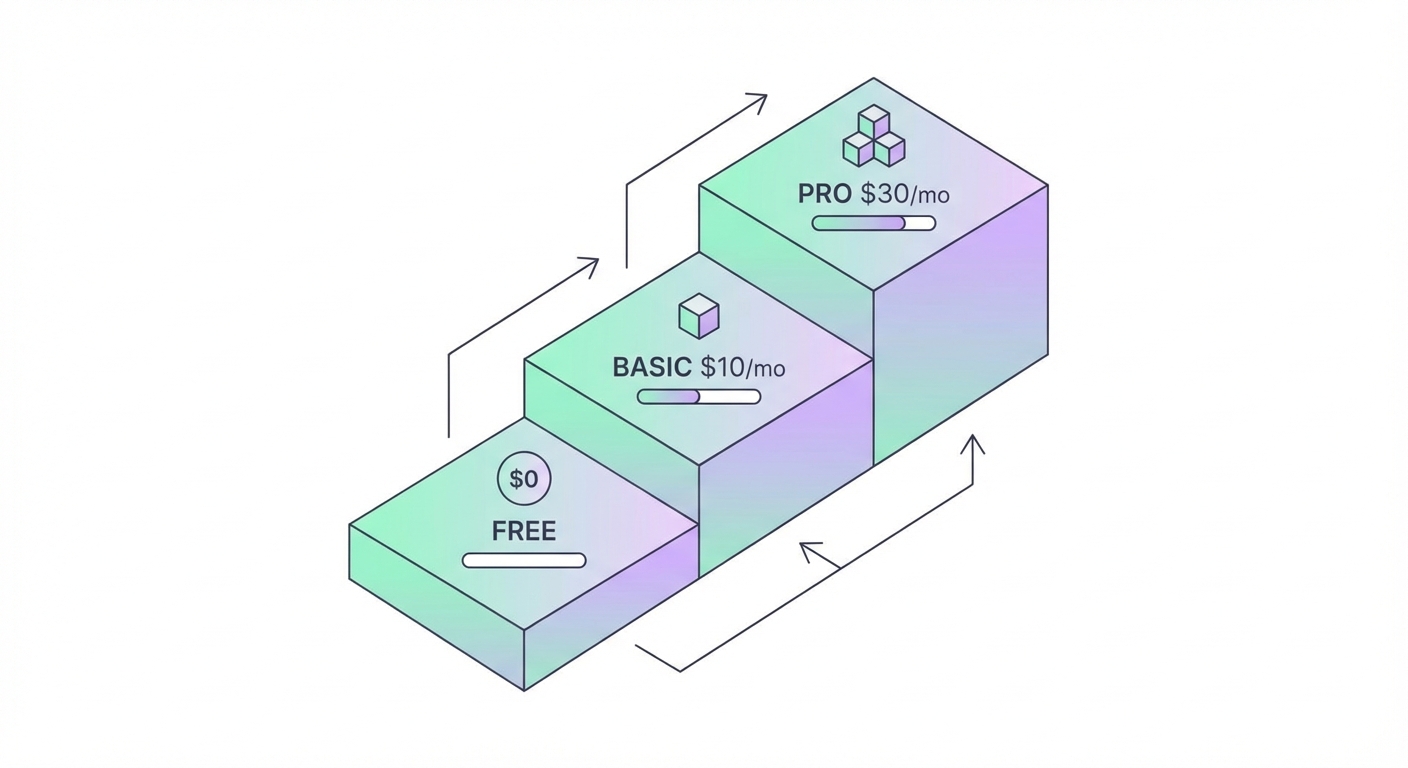
Supabase's free tier is surprisingly generous relative to what's out there. Here's the actual breakdown:
- 500 MB database storage. This is the raw Postgres storage for your tables, indexes, and data. For perspective, 500 MB holds somewhere around 2-5 million rows of typical app data (users, posts, comments). Most MVPs won't bump up against this for months.
- 1 GB file storage. For images, documents, and other files stored in Supabase Storage.
- 2 GB bandwidth. This is total egress — data transferred out of your database and storage combined. This is where the free tier gets tight faster than you'd expect.
- 50,000 monthly active users for Auth. More than enough for most startups. You'd need to be doing very well for this to be your bottleneck.
- 500,000 Edge Function invocations. Supabase's serverless functions. Half a million per month is solid for most use cases.
- Two projects maximum. One for production, one for staging. This is a real constraint if you like to spin up projects for experiments.
Anya ran her SaaS on the free tier for five months straight. Around 400 users, ~100 MB of data, moderate API traffic. She stayed well within limits. The two-project cap was annoying — she wanted a third project for a side experiment — but for her main product, the free tier covered everything.
Where the Free Tier Breaks
The bandwidth limit is the silent killer. 2 GB sounds like a lot until you realize every API call transfers data. A typical SaaS page load might pull 50-100 KB from Supabase. Run the numbers: 500 daily active users, 20 API calls each, averaging 50 KB per call -- that's 500 MB per day. Your 2 GB allowance is gone in four days.
Anya hit this wall in month four. Her app had a dashboard that loaded a moderately complex dataset on every visit. Users refreshed it multiple times a day. She went from "comfortably within limits" to "over the bandwidth cap" in about two weeks as her user base grew from 300 to 500.
The other gotcha is the database compute. The free tier also runs on shared compute. During peak hours, Anya saw API response times balloon from 50ms to 300ms. Not a crisis, but visible in the metrics -- and the kind of thing that would start mattering as traffic grew.
Pro Plan: The Sensible Default
When Anya upgraded, she went to the Pro plan at $25/month. Here's what changed:
- 8 GB database storage. A 16x increase from the free tier.
- 100 GB bandwidth. This was the big one. Going from 2 GB to 100 GB meant she stopped thinking about bandwidth entirely.
- Dedicated compute (Micro instance). Consistent performance instead of shared resources.
- 100,000 monthly active users for Auth.
- 2 million Edge Function invocations.
- No project limit. Spin up as many projects as you need.
- 7-day backup retention. The free tier has no automated backups, which is terrifying once you think about it.
At $25/month, the Pro plan is genuinely cheap for what you get. Anya compared it to running her own Postgres instance on AWS (RDS t4g.micro at ~$13/month, plus load balancer, plus auth service, plus storage, plus bandwidth) and estimated the equivalent AWS bill would be $80-120/month before she even counted her time managing it.
The Pro plan's included bandwidth and compute are sized for apps with up to a few thousand active users. Beyond that, you start looking at compute add-ons.
Compute Add-ons: Where Costs Actually Scale
Supabase's pricing model is unusual in that the base plan prices are relatively fixed, and the variable costs come from compute add-ons. If your database needs more horsepower, you attach a larger compute instance:
- Micro (default on Pro): 2-core ARM, 1 GB RAM — included in Pro
- Small: 2-core ARM, 2 GB RAM — $50/month add-on
- Medium: 2-core ARM, 4 GB RAM — $100/month add-on
- Large: 2-core ARM, 8 GB RAM — $200/month add-on
- XL and above: Scaling up from there for heavier workloads
For Anya, the Micro instance was fine until her app hit about 2,000 daily active users running complex dashboard queries. She bumped to Small ($50 add-on) and the performance issue disappeared. Her total monthly Supabase bill went to $75. Still much less than the equivalent self-managed infrastructure.
The important thing to understand is that compute costs are the primary scaling dimension. Your storage can grow, your bandwidth can spike, but for most apps, the thing that actually requires upgrading is the compute instance because complex queries on growing datasets need more CPU and memory.
Team Plan: The Enterprise Stepping Stone
At $599/month, the Team plan targets companies that need SOC 2 compliance, priority support, and SSO. The functional differences from Pro are relatively small — more included storage, more bandwidth, longer backup retention. You're mostly paying for the compliance and support layer.
Anya isn't there yet. She will be when her first enterprise customer asks for a SOC 2 report, and she knows it. But for now, Pro plus a compute add-on handles her workload.
Strategies for Staying Cheap
Here's what Anya learned about keeping Supabase costs low as her app scaled:
Use RLS instead of middleware. Row Level Security policies run inside the database, which means filtered queries return less data. Less data returned means less bandwidth consumed. If you're filtering in application code after pulling entire datasets, you're literally paying for bandwidth you could avoid.
Paginate aggressively. Why load 500 rows when the user only sees 20? Supabase supports range headers and limit/offset parameters. Use them. Anya cut her bandwidth usage by 60% by implementing proper pagination on her dashboard tables.
Cache on the client. React Query, SWR, or even plain localStorage caching cuts the number of round trips to Supabase dramatically. Slap a five-minute cache TTL on data that only changes hourly and you'll eliminate thousands of pointless API calls per day.
Use database functions for heavy lifting. Instead of pulling data to your app, transforming it, and pushing it back, write a Postgres function that does everything in-database. One function call replaces three round trips.
Monitor your bandwidth. The Supabase dashboard shows usage in real time. Set alerts before you approach the limit, not after you've blown past it. Anya checks hers weekly, the same way she checks her bank account.
Let Agents Handle the Ops Tax
One cost that doesn't show up on the Supabase invoice is the developer time spent on data operations. Bulk updates, cleanup passes, syncing records between systems — these eat hours that could go toward building features.
The Supabase Inventory Tracker agent picks up the operational work Anya used to do by hand. She's running an e-commerce product, and keeping inventory levels accurate between her Supabase database and Shopify store used to eat a chunk of every week. The agent monitors stock levels, flags discrepancies, and updates records without her writing one-off scripts.
For Anya, the math is simple: she pays $75/month for Supabase infrastructure. She saves 5-10 hours a month of developer time by using agents for data operations. At her consulting rate, those hours are worth far more than the infrastructure cost. The most expensive thing about running a database was never the database itself. It was the human time spent babysitting the data.
The Bottom Line
Once you get the model, Supabase's pricing is pretty simple: a generous free tier for building and validating, $25/month Pro for production, and compute add-ons when you need more muscle. The thing that surprised me most wasn't the cost -- it was how long you can run on minimal spend before an upgrade becomes necessary.
If you're a startup founder watching every dollar, Supabase is one of the cheaper paths to a production-ready backend. Just watch your bandwidth, paginate your queries, and don't store your entire dataset in localStorage "for performance."
Try These Agents
- Supabase Inventory Tracker — Track inventory levels, flag discrepancies, and keep stock data accurate in Supabase
- Supabase Data Sync Agent — Sync data between Supabase tables and external sources without manual scripts
- Supabase Database Cleanup Agent — Find and resolve duplicate, orphaned, and stale records automatically