
Supabase vs MongoDB: SQL Won. Here Is Why We Switched.
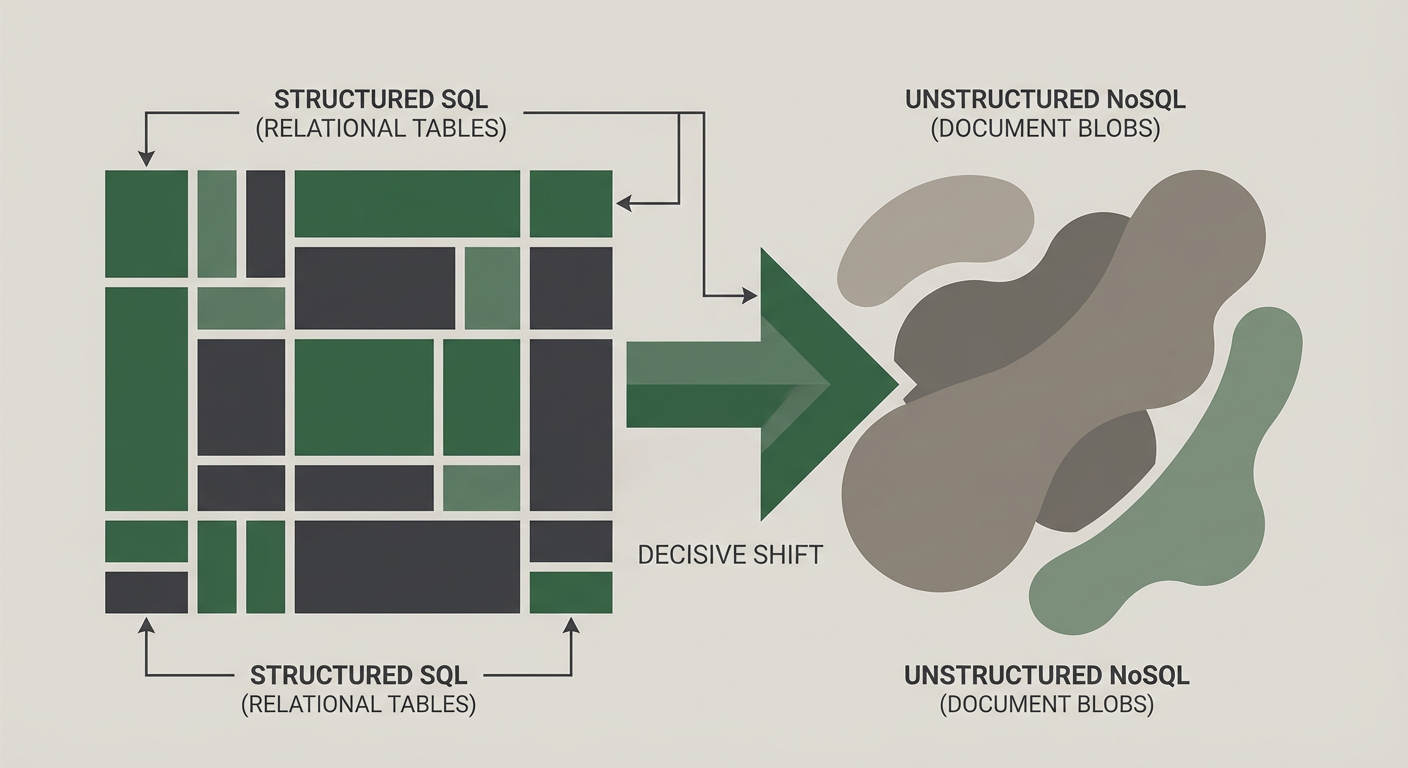
Rafael is a backend engineer who spent four years building on MongoDB Atlas. He liked it, genuinely. The document model felt natural for the first six months of every project. Throw a JSON blob into a collection. No migrations. No schema files. Just vibes and flexibility.
Then month seven would arrive, and the vibes would rot.
What follows is the story of why Rafael's team bailed on MongoDB for Supabase -- what got better, what got worse, and why the SQL-vs-NoSQL argument is basically settled for the kind of work most teams actually do.
The Document Model Honeymoon
MongoDB is great on day one. No schema to define upfront. Nest objects as deep as you want. Your user document can have an addresses array with an orders array inside each address with line_items nested inside each order. It maps directly to how you think about data in your application code, and that feels incredibly productive.
Rafael's team built their first product on MongoDB because they were moving fast and the schema was changing weekly. Relational databases felt like bureaucracy — migrations, foreign keys, join tables. MongoDB felt like freedom.
The problem is that "freedom" in data modeling is another word for "tech debt you haven't noticed yet."
When the Joins Hit
Eighteen months in, Rafael's team had accumulated 14 collections. The usual suspects -- users, organizations, projects, tasks, comments, attachments, notifications, billing events, audit logs -- plus five more that only existed because somebody needed to denormalize data for one specific feature.
The queries got ugly. To answer "show me all comments on tasks in projects owned by organization X," Rafael had to write an aggregation pipeline with three $lookup stages. Each $lookup is MongoDB's approximation of a join -- except slower, harder to optimize, and constrained in ways SQL joins aren't. Can't $lookup on a sharded collection. Can't leverage indexes across lookups the way a relational database uses composite indexes across joins.
In SQL, that same query is a three-line join with a WHERE clause. Rafael could have written it in two minutes. In MongoDB, the aggregation pipeline was 40 lines and took genuine effort to debug.
The team started building more and more denormalized collections to avoid these lookups. User data got copied into the tasks collection. Organization metadata got duplicated across three places. Now they had a new problem: keeping all those copies in sync. Every update to a user's name or an org's billing plan had to propagate to every collection that held a copy.
They were spending more time on data consistency than on features.
The Migration
Switching to Supabase meant switching to PostgreSQL, which meant -- for the first time -- defining an actual schema. Rafael spent a solid week modeling the relational structure: users, organizations, a join table for memberships, projects with foreign keys to orgs, tasks with foreign keys to projects. It felt slow at first. But the data model was clean, normalized, and honest about the relationships.
The migration itself was mechanical. Export from MongoDB as JSON. Transform nested documents into relational rows. Import into Postgres. The transformation script was about 200 lines of code, which sounds like a lot until you remember it replaced 14 collections worth of denormalized chaos.
What caught Rafael off guard was how dramatically the operational work simplified afterward. Need to find all users in orgs with overdue invoices? One SQL query with two joins. In MongoDB, that had required a custom script that pulled from three collections and reconciled the data in application code.
What Supabase Adds on Top
PostgreSQL alone would have been an improvement. But Supabase wraps it with features that make the whole experience better than running Postgres yourself.
Instant REST API. The moment Rafael created a table, PostgREST generated endpoints for it. His frontend team could read and write data without waiting for him to build an API layer.
Row Level Security. Instead of writing authorization checks in every API route, Rafael defined RLS policies at the database level. Users can only see their own data. Org admins can see their org's data. The rules live in the database, not scattered across middleware functions.
Auth built in. MongoDB Atlas doesn't have an auth system. You bring your own (Auth0, Cognito, Firebase Auth, whatever). Supabase includes auth with social logins, magic links, and JWT support. One less service to manage.
Realtime subscriptions. Supabase provides WebSocket-based realtime updates on database changes. Rafael used this to replace a polling system that was hitting MongoDB every 5 seconds.
The Honest Trade-offs
Look, MongoDB still genuinely wins in specific scenarios, and I'm not here to pretend otherwise.
Truly schemaless data. If you're ingesting data from dozens of wildly different sources -- IoT sensors, webhook payloads from 50 different services, log events with unpredictable fields -- MongoDB's flexible documents handle that gracefully without making you ALTER TABLE every time a new field appears. Postgres has jsonb for this kind of thing, but if your entire database is schemaless data, MongoDB was purpose-built for it.
Massive write throughput. MongoDB's sharding model is designed for horizontal scaling of writes. If you're doing millions of writes per second across a globally distributed cluster, MongoDB Atlas has a mature story for that. Supabase is running on a single Postgres instance (or a read replica setup), which is plenty for 99% of applications but won't compete at the extremes of write-heavy, globally distributed workloads.
The aggregation framework. It's verbose, yes. But MongoDB's aggregation pipeline can do things in-database that would require moving data out of Postgres and into a processing layer. For teams that live in the aggregation framework, switching means rewriting those pipelines as SQL or moving them to a separate analytics tool.
For Rafael's team — and I'd argue for most teams building SaaS products, internal tools, or content platforms — the trade-offs favored Supabase heavily. They didn't need global sharding. They didn't have schemaless data. They had relational data that they'd been pretending was schemaless, and it was costing them.
The Data Cleanup Problem
After the migration, Rafael's team had a new challenge: years of MongoDB-era data quality issues had been imported into their clean relational schema. Duplicate user records (the same person signed up with two different email capitalizations). Orphaned tasks pointing to deleted projects. Organization records with billing metadata that hadn't been updated since the original document was created.
Cleaning all of this up by hand would have eaten weeks. Instead, they used the Supabase Database Cleanup Agent to scan tables for duplicates, orphaned foreign keys, and stale records. It turned up 1,400 duplicate users, 800 orphaned tasks, and 200 organizations with stale billing data. Rafael reviewed what got flagged, signed off on the cleanup rules, and let the agent do the heavy lifting.
In a relational database, this kind of cleanup is actually tractable because the relationships are explicit. Foreign keys tell you exactly which records are orphaned. Unique constraints tell you exactly where duplicates live. In MongoDB, finding orphaned documents required writing custom scripts that crawled multiple collections — because the database itself didn't know about the relationships.
SQL Won, But Not Because It's Perfect
The SQL-vs-NoSQL debate was never really about the query language. It was about whether your data has relationships. If it does -- and let's be real, it almost always does -- a relational database makes those relationships explicit, enforceable, and queryable. MongoDB pushes relationship management into your application code. That's fine until it isn't, and by the time it isn't, you're staring down a few hundred thousand documents that need untangling.
Rafael doesn't regret his years on MongoDB. He learned a lot, and the document model taught him to think carefully about data access patterns. But he's not going back. PostgreSQL's relational model, Supabase's DX, and AI agents handling the operational grunt work add up to a team that ships faster and spends a lot less time wrestling with their database.
Try These Agents
- Supabase Database Cleanup Agent — Find and resolve duplicate, orphaned, and stale records in your Supabase database
- Supabase Data Sync Agent — Sync data between Supabase tables and external sources automatically
- Supabase User Data Manager — Manage user records and properties across your database