
TikTok Brand Monitoring: We Caught a Viral Complaint Before It Spread
Rafael works on the comms team at a meal-kit delivery company. On a Tuesday afternoon, a creator with 340K followers posted a 45-second TikTok showing a box of their ingredients that had arrived warm, with chicken sitting at room temperature and condensation dripping onto the recipe cards. The creator didn't tag the brand. She didn't use any hashtags. She just held up the box, made a disgusted face, and said "never again."
By the time Rafael's team found it the next morning -- through a Google Alert, of all things -- the video had 89,000 views and 2,400 comments. People were sharing their own horror stories. Screenshots of the video were spreading to Twitter. A local news account had already stitched it.
That was the incident that made Rafael rebuild their entire TikTok monitoring approach. On TikTok, by the time a complaint is "viral," you have already lost the window to respond.
Why TikTok Monitoring Is Harder Than Every Other Platform
On Twitter, brand monitoring is straightforward. Set up a search for your brand name. Maybe add common misspellings. You'll catch 90% of relevant mentions because Twitter is text-first, searchable, and indexed in near-real-time. Reddit works similarly -- text-based, threaded, searchable.
TikTok breaks all of that. Here's why.
No native mention alerts. Twitter notifies you when someone @-mentions you. TikTok has nothing like that. If a creator says your brand name out loud in a video but does not tag your account, there is no built-in way to find it.
Video-first content. The most damaging brand mentions happen inside videos. Spoken aloud, shown on screen, referenced through visual context. A creator holding up your product and making a face says more than any tweet, but text-based monitoring tools cannot see it. Your brand name is not in the caption. Not in the hashtags. Not anywhere a keyword search would find it.
Algorithmic amplification is unpredictable. A tweet with low engagement dies fast. A TikTok video sitting at 200 views can get pushed to 500,000 by the algorithm two days later, out of nowhere. The urgency of a brand mention can change overnight. Something you safely ignored on Wednesday turns into a crisis by Friday.
Stitches and duets compound the problem. When someone stitches a negative brand mention, they create a new video that references the original but may not mention your brand at all. The conversation branches. Each branch reaches a different audience. Tracking the spread of a narrative across stitches and duets is something no traditional monitoring tool is built for.
Rafael's Google Alert caught the video because someone on Twitter had screenshotted it and mentioned the brand name in text. That's how broken the monitoring pipeline was -- he was relying on TikTok content leaking to a platform he could actually search.
The Paid Tool Options (and Their Limits)
Several platforms claim TikTok monitoring. Here is what you actually get.
Brand24 tracks TikTok captions, hashtags, and comments containing your keyword. Good for tagged mentions and hashtag campaigns. Completely blind to verbal mentions in videos. Their TikTok coverage is noticeably thinner than what they offer for Twitter or the web.
Mention offers similar functionality -- keyword-based TikTok monitoring that catches text elements but not video content. Good for tracking your branded hashtag campaigns. Less useful for catching someone roasting your product without tagging you.
Brandwatch goes deeper on social listening and claims TikTok coverage. Pricing starts in the "request a demo" range, which in practice means $1,000+/month. You get more than TikTok monitoring for that price, but the TikTok-specific part still leans heavily on text-searchable metadata.
Sprout Social includes TikTok in its listening module. Same story: keyword matching on text fields. If nobody types your brand name, you see nothing.
The common thread: every tool monitors what people type about you on TikTok. None of them monitor what people say about you on TikTok. And on a platform where the content is video, that gap is enormous.
What Rafael Built Instead
After the warm-chicken incident, Rafael set up an agent workflow that approaches TikTok monitoring from the opposite direction. Instead of searching for text mentions of the brand name, the agent runs broad searches across TikTok -- by keyword, by topic area, by competitor names -- and then analyzes what it finds.
The workflow runs daily and does three things.
First, it searches TikTok for content related to the brand's product category and the brand name itself. This catches both direct mentions and adjacent conversations -- someone reviewing a competitor and comparing it to Rafael's brand, for example, or a creator doing a "products I stopped buying" video that includes their meal kit without ever naming it in the caption.
Second, for videos that surface in the search, the agent pulls transcripts. This is the part that changes everything. A TikTok where someone says "I tried [Brand] and the chicken was literally warm" now becomes searchable text. The agent can flag brand mentions that exist only in spoken audio -- the exact category of mention that every text-based monitoring tool misses.
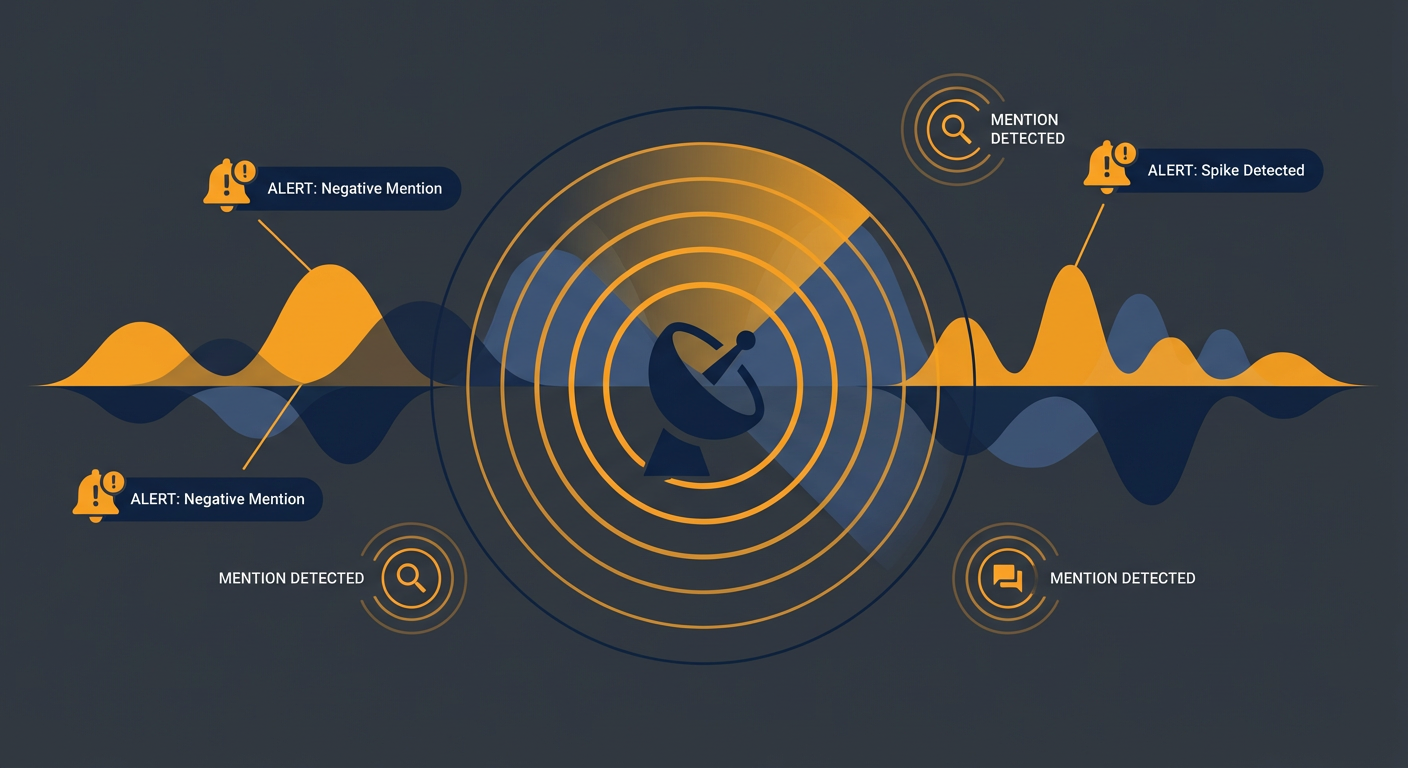
Third, the agent scores each mention for urgency. A creator with 5,000 followers mentioning a minor packaging issue is a low-priority note for the product team. A creator with 300K followers showing spoiled food is a drop-everything situation. The agent weighs creator reach, sentiment, topic severity, and current view velocity to produce a priority score.
Rafael gets the results in a morning Slack digest. High-priority items trigger an immediate alert. In four months, his team has caught three potentially damaging videos before they hit 10,000 views. Two of those times, they reached out to the creator directly, fixed the issue, and the creator posted a follow-up praising the response. The third time, they got ahead of it with a proactive statement before any media picked it up.
The 6-Hour Window
Rafael tracked TikTok brand mentions for several months and noticed a pattern. You have about 6 hours between when a negative video starts picking up traction and when it becomes unmanageable.
In the first few hours, a video might sit at 500-2,000 views. Comments trickle in. Nobody has stitched it yet. If you reach out to the creator now with a genuine offer to fix the problem, there is a good chance of turning things around. Creators at this stage are usually surprised that anyone noticed. They have not committed to a narrative yet.
Between hours 6 and 24, if the video is going viral, you see the acceleration. Views jump from thousands to tens of thousands. Stitches and duets start appearing. Comments shift from individual complaints to collective grievances. Reaching out to the original creator can still help at this point, but you are now also dealing with derivative content from other creators. The narrative has forked and you cannot control all the branches.
After 24 hours, if the video has hit six figures in views, you're in reactive crisis mode. The story has been screen-recorded and posted to Twitter. Reddit threads exist. Maybe a journalist has DM'd the creator. Your response now looks defensive instead of proactive, no matter how good it is.
The entire value of TikTok monitoring comes down to consistently operating in that first window. And you can't do that by checking TikTok manually once a day, or by relying on tools that only catch text mentions.
Why Use an Agent for This
The TikTok brand mention monitor searches TikTok continuously, pulls transcripts to catch verbal mentions, and scores each one for urgency. You find out about problems from a Slack notification while you still have time to act, not from a Google Alert the next morning when the damage is done.
The warm-chicken video that kicked off Rafael's monitoring overhaul? With this agent running, it would have been flagged within hours of posting, before it hit 5,000 views. The team could have reached out to the creator that same afternoon. Instead, they found out 18 hours later through a screenshot on Twitter, and spent the next two days doing damage control.
For brands that are also active on other platforms, pairing TikTok monitoring with a broader brand monitoring agent gives you coverage across Twitter, Reddit, news, and review sites. The TikTok-specific agent handles the hard part -- video content on a platform built to resist text-based search -- while the general agent covers platforms where keyword monitoring actually works.
You can also feed monitoring data into a sentiment analysis agent for weekly trend reports. Individual mentions tell you about individual incidents. Sentiment tracked over time tells you whether brand perception on TikTok is trending up or down, and what is driving the shift.
Rafael's monitoring setup cost a fraction of what Brand24 charges. It catches things Brand24 can't. And it saved his team from at least two situations that would have each cost more than a year of tool subscriptions to clean up.
Try These Agents
- TikTok Brand Mention Monitor -- Monitor TikTok for brand mentions including verbal references in video content
- Brand Monitoring Agent -- Track brand mentions across Twitter, Reddit, TikTok, news, and review sites
- Social Listening Alerts -- Get Slack digests of brand mentions across all social platforms with priority scoring
- Sentiment Analysis -- Track brand sentiment trends across social media and reviews